
How to Write a Business Plan: A Step-by-Step Guide for Beginners
Writing a business plan helps you think through the practicalities of starting and growing a business. It allows you to define your target customers, estimate costs, understand competitors and set realistic goals. A well-structured business plan can also be valuable when seeking funding or presenting your ideas to potential partners and investors. By identifying opportunities and potential risks early, you can make more informed decisions before launching your new venture.
But how do you write a business plan, and what should it include? In this guide, we’ll walk you through the key steps to creating a business plan, helping you turn your business idea into a clear, practical plan for success.
Key takeaways:
- Plan your business idea: Define your target customers, research competitors and outline your products or services.
- Understand your finances: Estimate startup costs, forecast revenue and identify potential risks.
- Turn plans into action: Set realistic goals and use a business plan template to organise your next steps.
1. Outline Your Business Idea
Start by describing what your business will do, who it will serve and what makes it valuable. Think about the products or services you plan to offer, the problem you aim to solve and why customers might choose your business over competitors.
You don’t need to have every detail figured out at this stage. The goal is to establish a clear overview of your idea and the opportunity you’re hoping to pursue.
2. Research Your Target Market
Understanding your potential customers is essential when writing a business plan. Consider who is most likely to buy your products or services, what they need and how much they might be willing to pay.
Research your competitors, too. Look at what they offer, how they price their products or services and where there may be opportunities to stand out. This research can help you assess demand and make more informed decisions before investing money in your business.

3. Plan Your Products, Services and Marketing
Explain what your business will sell and how it will generate revenue. Consider your pricing, how you’ll deliver your products or services and whether you’ll sell online, in person or through other channels.
Next, think about how you’ll attract customers. Your marketing plan might include social media, a website, local advertising, partnerships or networking. Choose approaches that suit your target audience and budget rather than trying to do everything at once.
4. Calculate Your Startup Costs
Before launching, identify the expenses you’ll need to cover. These might include equipment, stock, insurance, website development, marketing, software and any relevant registration or professional fees.
Separate your initial setup costs from ongoing expenses, such as rent, subscriptions, materials and transport. Estimating these figures will help you understand how much money you need to get started and how much working capital you may need to keep the business running.
5. Estimate Revenue and Profit
Your business plan should include a realistic estimate of how much money you could generate. Consider how many sales you might make each month, your average selling price and the costs involved in delivering your products or services.
Subtract your estimated expenses from your expected revenue to calculate potential profit. Your figures won’t be exact, particularly when you’re starting out, so make sensible assumptions and consider what would happen if sales were lower than expected.
6. Identify Potential Risks
Every business faces uncertainties. These could include limited customer demand, strong competition, rising costs or delays in finding suppliers.
Think about the challenges that could affect your business and how you might respond. For example, keeping some money aside for unexpected expenses or developing more than one way to attract customers can help you prepare for setbacks.
7. Set Goals and Create an Action Plan
A business plan is most useful when it gives you a clear idea of what to do next. Set a few realistic goals for your first 30–60 days, such as researching suppliers, setting up your website, registering your business where necessary or contacting potential customers.
Break larger goals into manageable tasks and give yourself deadlines. You can then review your progress and update your plan as your business develops.
Can You Use a Business Plan Template?
You don’t have to write your business plan from a blank page. A template can provide a structure to follow, helping you organise your ideas and work through the key areas of your business.
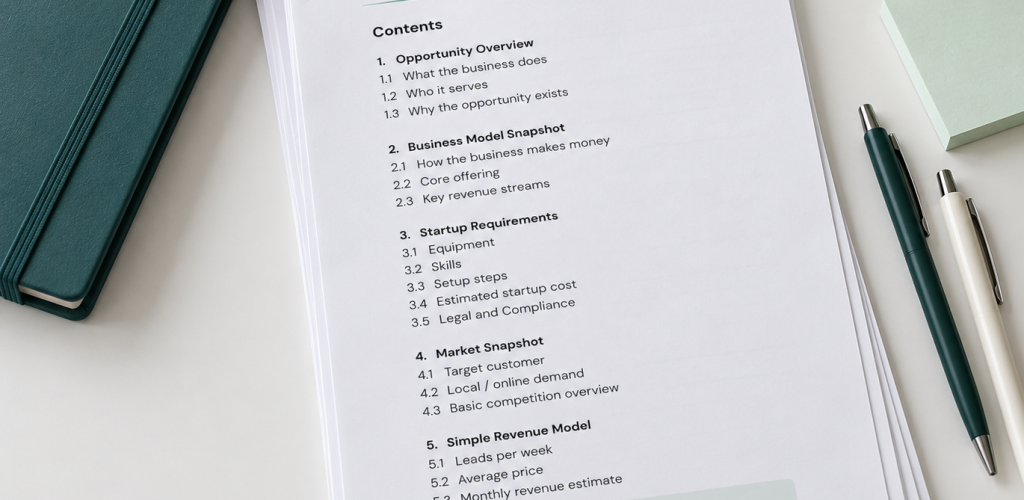
At VentureBlueprint, our free Business Plan Starter Template includes ten practical sections covering your business opportunity, business model, startup requirements, market research, revenue, costs, potential risks and launch plan. It’s designed to help beginners turn their ideas into a more structured plan.
If you’d like some guidance getting started, you can download our free business plan template and use it to begin building your own plan.

Final Thoughts
Writing a business plan doesn’t need to be complicated. Start with what you know, research any gaps in your knowledge and use realistic estimates when planning your finances. Your plan doesn’t have to be perfect from day one; you can refine it as you learn more about your customers and the market. For additional guidance, read the UK government’s advice on writing a business plan.
The most important thing is to turn your idea into a practical set of next steps. With the right preparation and resources, you can approach starting your business with greater clarity and confidence.